HISTORY
MAPS
PUBLICATIONS
PHOTO GALLERY
PEOPLE
UNITS
WEAPONS/EQUIPMENT
NEAT STUFF
The men who commanded the Infantry Replacement Training Center at Camp Croft ...
The assignment as commander of an IRTC was not at all a "make work" or otherwise dead end assignment. Four of the officers profiled below joined the likes of Patton, Bradley and Ridgeway and became Corps Commanders which, for a professional officer, was the ultimate position of tactical leadership.
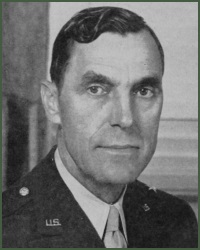 Brigadier General Louis A Kunzig (6-Jan 1882
to 7-Aug-1956)
Brigadier General Louis A Kunzig (6-Jan 1882
to 7-Aug-1956)
Graduate of USMA (West Point)
1926-07 – 1930-07 Instructor to Minnesota National Guard
1930-09 – 1931-06 Attending the Army War College
1931-06 – 1934-08 Commanding Officer Fort Washington, Maryland
1934-08 – 1937-09-15 Attached to Headquarters 3rd Corps Area
1937-09 – 1940-03 Commanding Officer 11th Infantry Regiment
1940-03 – 1940-12 Professor of Military Science & Tactics, University of Pennsylvania
1941-04 – 1941-07 Executive Officer, Infantry Replacement Training Center, Camp Croft, South Carolina
1941-07 – 1944-01-31 Commanding Officer Camp Blanding, Florida
1944-01-31 Retired
Major General Oscar Woolverton Griswold
(1886 - 1959)
Born October 22,
1886 in Ruby Valley, Nevada. He attended the University of Nevada
(1905-06) before receiving an appointment to the U.S. Military Academy. Upon graduation from West
Point in the Class of 1910, he was commissioned a Second Lieutenant in
the Infantry. His early company grade assignments included three years service in
from 1914 to 1917. During World War I he served as a Major and Lieutenant
Colonel in the 84th Infantry Division, American Expeditionary Forces, 1918-19,
and participated in the Meuse-Argonne Campaign. He was assigned to
the TAC Department, U.S. Military Academy, from 1921 to 1924. In 1925 he
graduated from the Command and General Staff School. He was also a graduate
of the Army War College (1929). From 1929 to 1931 he served with the War
Dept. General Staff. This duty was followed by service with the Air Corps.
From 1936 to 1939 he was assigned to the Office, Chief of Infantry. He
was promoted to Major General in 1941 while serving as the IRTC commander at
Camp Croft (see photo). He later served in
the Southwest Pacific, Philippines Theater. He was Commanding General of
the XIV Corps, which fought in Guadalcanal (1942-43), New Georgia (1943-44),
and the Philippines (1944-45). He was promoted to Lieutenant General in
1945. In 1946 he received an LLD from the University of Nevada. From March
15, 1947 to April 14, 1947, he served as Commanding General of the Third
U.S. Army. Among his many awards and decorations are the Distinguished
Service Medal with Oak Leaf Cluster, Navy Distinguished Service Medal,
Silver Star with Oak Leaf Cluster, Bronze Star Medal, Air Medal, and Purple
Heart. In October 1947, Lieutenant General Griswold retired to The Broadmoor
in Colorado Springs, Colorado. He died on October 5, 1959.
Major General Alexander McCarrell Patch, Jr. (1889 - 1945)
Born at Fort Huachuca,
Arizona, the son of then Captain Alexander M. Patch Sr. He grew up in Pennsylvania
and attended Lehigh University for a year before transferring to the US
Military Academy, where he graduated in 1913. Patch was the distinguished
graduate of the 1925 US Army Command and General Staff School class and
served in both World Wars I and II.
Promoted to BG and commander of Camp Croft on Aug 4, 1941. He has the distinction of forming the Americal Division, the only US division in World War II to have a name,
not a number. After forming the division in New Caledonia, Patch took the
unit to Guadalcanal in December 1942, where they relieved the 1st Marine
Division. Named commander of XIV Corps, which included the Americal and
2d Marine Divisions, Patch led the final offensive against the Japanese
on the island. In 1944, Patch became Seventh Army commander, leading the
Allied landings in southern France on 15 August-Operation Anvil/Dragoon.
In 1945, he became Fourth US Army commander and was appointed to a group
to study the US Army's postwar situation. He died of pneumonia within days
of completing the study in November 1945.
Lieutenant General Clarence R Huebner (1888-1972)
Born in Bushton, Kansas, Huebner was a farm boy who spent almost seven years serving from Private to Sergeant in the 18th Infantry, Huebner received a regular commission in November 1916. During World War I, he successfully led a company, battalion, and regiment of the lst Infantry Division-the "Big Red One"-from the first American regimental assault at Cantigny through Soissons, Saint-Mihiel, and the Meuse-Argonne. For his outstanding service in this war, he received two Distinguished Service Crosses, a Distinguished Service Medal, and a Silver Star. In 1924, he attended the Command and General Staff School at Fort Leavenworth and served on its faculty from 1929 to 1933. As the distinguished commander of the "Big Red One" in World War II, Huebner led the invasion at Omaha Beach, forged the breakout at Saint-Lo, repelled the German counteroffensive at Mortain, and pursued the German Army across France, which culminated in the Battles of Aachen and the Huertgen Forest. In January 1945, he took command of the V Corps, which he directed from the Rhine to the Elbe, where his troops made the first contact with the Red Army. After WWII, Huebner was the last Military Governor (acting) of the American Zone in Germany from May 15, 1949 to September 1, 1949. He retired in 1950.
40-42: Director Training Branch War Department General Staff
42-43: Director of Training Services of Supply
43-44: General Officer Commanding 1st Division, Sicily-North-West Europe
45 : General Officer Commanding V Corps, North-West
Europe
46-47: Chief of Staff US Forces US European Theater of Operations
47-50: Deputy Commander in Chief US European Command
50 : Retired
Major General Paul L Ransom (1894-1985)
42-43: General Officer Commanding 98th Division, Pacific
45 : Assistant General Officer Commanding 5th
Division
48 : Retired
Major General Charles Fullington
Thompson (1882-1954)
Born in Jamestown, North Dakota, 11 December 1882. A graduate of West Point, Class of 1904. During World War I he served with the First Army Intelligence Unit and later in the same capacity with the Second Army. In 1921 he was Chief of Press Relations for Military Intelligence. He was commanding general of the Military District of Washington in 1944-45, and then retired from the Army. He had made his home in Washington. One of General Thompson’s appointments during World War I was adjutant of the Eighty-Second Division. He participated in the St. Mihiel offensive. He won the Distinguished Service Medal and the Medal of the French Legion of Honor. Lt. Col. and later US President Dwight D. Eisenhower served as Chief of Staff under General Thompson when the latter commanded the Army’s Third Division at Fort Lewis, Washington, from July 1940 to August 1941. On August 11, 1941, General Thompson was assigned to command of the First Army Corps at Columbia, South Carolina and the division participated the Carolina maneuvers which pitted Thompson's First Corp against the Second Corps. The maneuvers lasted until the end of November.
31-34: Assistant Chief of Staff Philippine Department
37-38: Assistant Commandant Infantry School
40-41: General Officer Commanding 3rd Division
41-42: General Officer Commanding I Corps
42-44: Island Base Commander South Pacific
44 : General Officer Commanding XVIII
44-45: General Officer Commanding Washington Military District
45 : Retired
 Brigadier General Reginal F
Buzzell (1894 – 1959)
Brigadier General Reginal F
Buzzell (1894 – 1959)
1942 - 1943 Assistant Commandant Infantry Replacement Training Center Camp Croft
1943 Commandant Infantry Replacement Training Center Camp Wheeler
1946 Assistant Commandant Infantry Replacement Training Center Camp Wheeler
1946 - 1951 Assistant Commanding General 43rd Division
1951 Retired
Major General Durward S Wilson, Sr. (1886-1970)
40-41: Commanding Officer 21st Brigade
41-42: Commanding Officer 24th Brigade
42 : General Officer Commanding 24th Division,
Hawaii
42 : General Officer Commanding 6th Motorized
Division
42-44: Commandant Infantry Replacement Training Center Camp Croft
44-45: General Officer Commanding South-East Sector Eastern Defense
Command
46 : Retired
Major General John Hutchinson Hester (1886 - 1976)
Mexican Exp 1916-17
40-41: Executive Officer to Chief of Staff for reserve Officers Affairs
41 : Commandant camp Wheeler
41-43: General Officer Commanding 43rd Division, New Georgia
43 : General Officer Commanding New Georgia
Occupation Force
43-44: Commandant Tank Destroyer Center
44-45: Commandant Infantry Replacement Center
46 : Retired
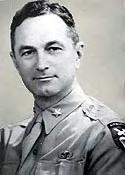 Major General William M
Miley (1897 – 1980)
Major General William M
Miley (1897 – 1980)
1942 Commanding Officer 503rd Parachute Infantry Regiment
1942 Commanding Officer 1st Parachute Infantry Brigade
1942 - 1943 Assistant Commanding General 82nd Division
1943 - 1945 Commanding General 17th Airborne Division, North-West Europe
1945 Commanding General 8th Division
1946 Commandant Infantry Replacement Training Center Camp Croft
1947 Assistant Commanding General 11th Airborne Division
1950 Commanding General 11th Airborne Division
1952 - 1954 Commanding General US Army Forces Alaska
1954 - 1955 Chief of Staff Army Field Forces
1955 Retired
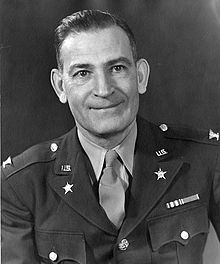 Brigadier General Lee Saunders Gerow (1891 – 1982)
1942 - 1943 Commanding Officer 338th Regiment
1943 - 1945Assistant Commanding General 85th Division
1949 Retired